Biscoff Cake Recipe
Introduction
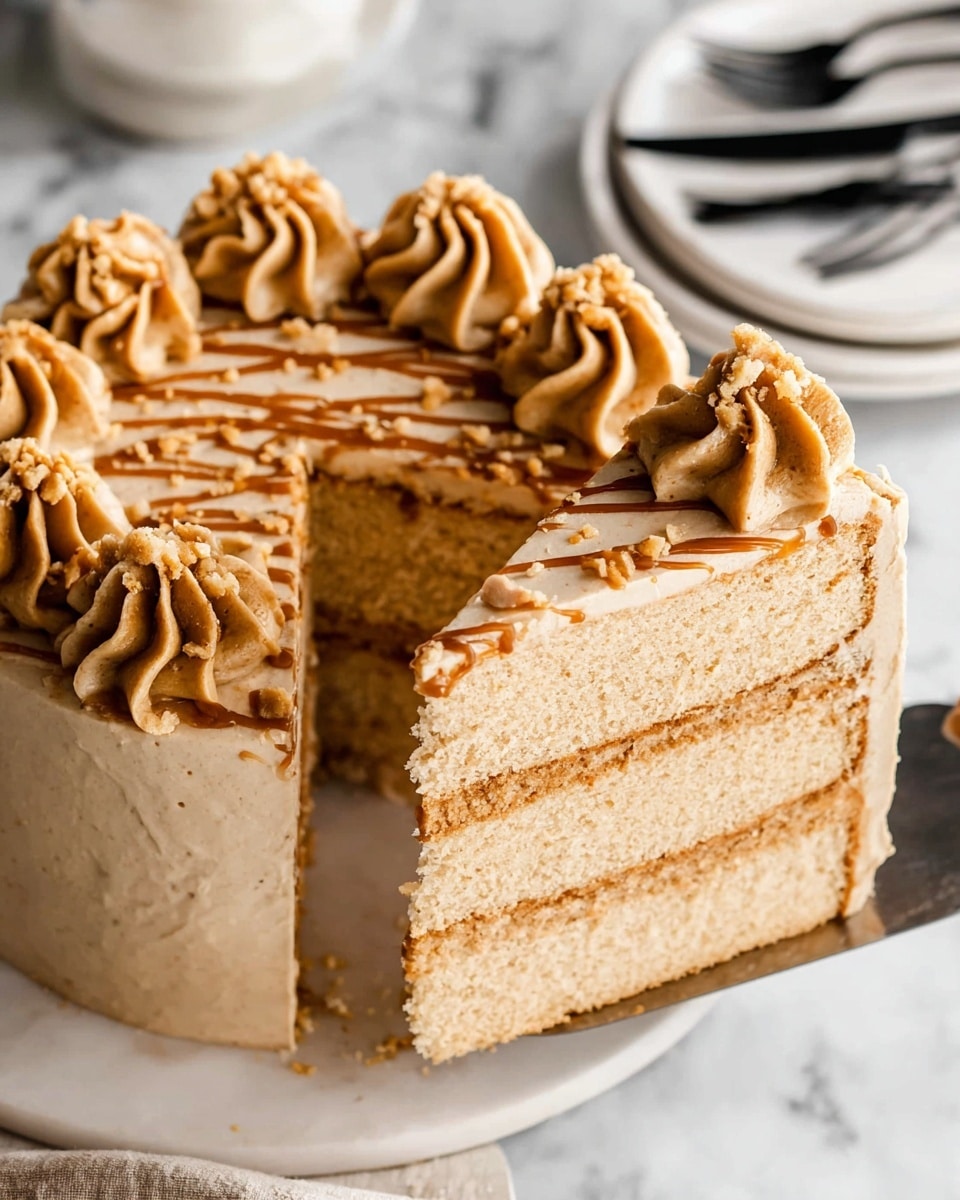
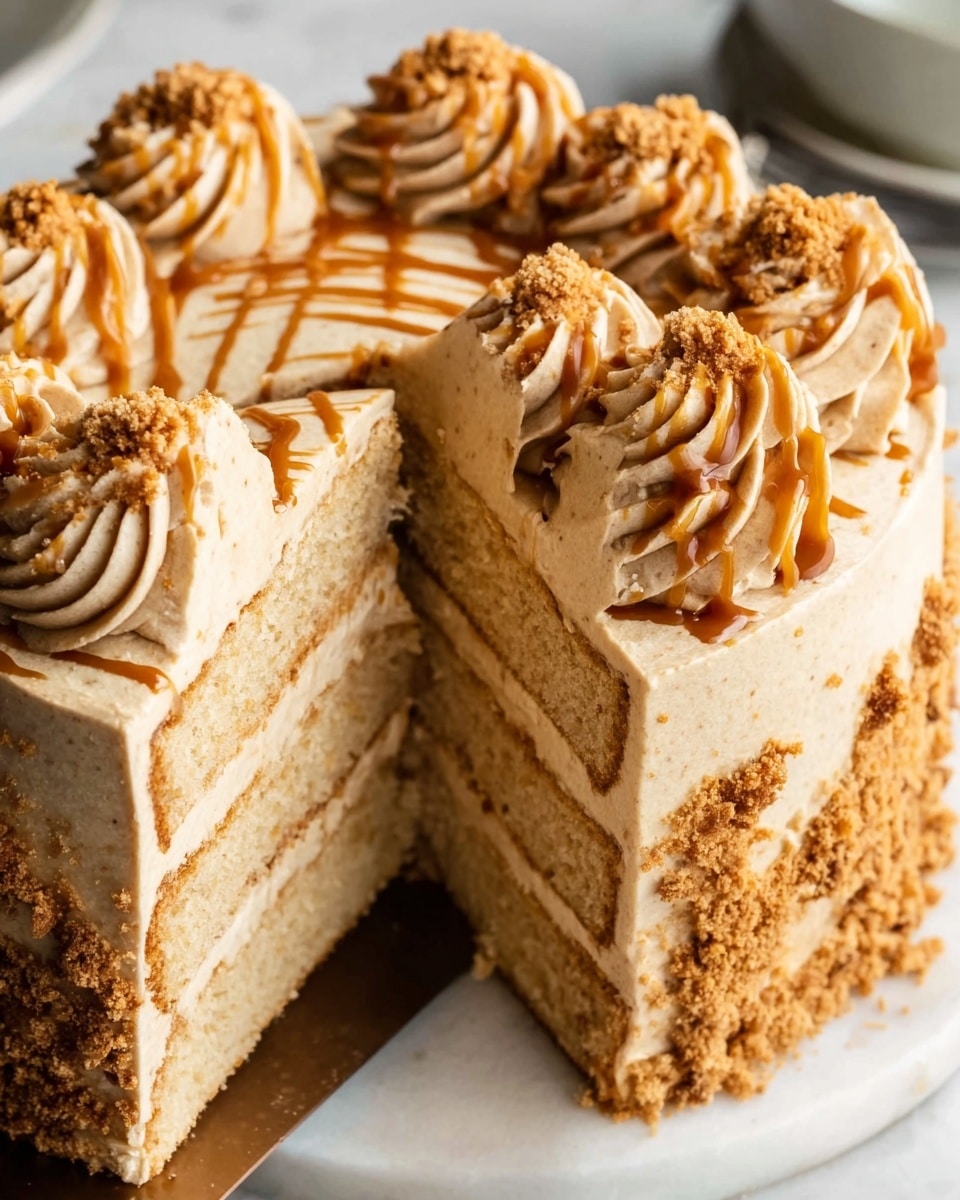
This Biscoff Cake is a delightful treat for anyone who loves the rich, caramelized flavor of cookie butter. Moist layers of cake are filled and frosted with creamy Biscoff-infused buttercream, then finished with a drizzle of melted cookie butter and crunchy Biscoff crumbs. It’s a perfect dessert for celebrations or whenever you want a special sweet indulgence.
Ingredients
- 2/3 cup unsalted butter, room temperature (150 grams)
- 1 cup granulated sugar (200 grams)
- 1 teaspoon vanilla extract
- 3 large eggs, room temperature
- 2 tablespoons sour cream (30 grams)
- 14 oz container cookie butter, divided (400 grams)
- 2 cups all-purpose flour (250 grams)
- 2 teaspoons baking powder
- 1 teaspoon kosher salt
- ¾ cup whole milk, at room temperature (180 ml)
- ½ cup unsalted butter, slightly cold (115 grams)
- 2 ½ – 3 ½ cups powdered sugar (300-440 grams)
- ½ cup cookie butter (from 14 oz container, plus extra for drizzling) (120 grams)
- 2-3 tablespoons milk, any kind
- 2 Biscoff cookies, crushed (optional)
Instructions
- Step 1: Preheat the oven to 350°F. Line the bottoms of two 8-inch cake pans with parchment paper and spray with nonstick spray. Set aside.
- Step 2: In a large bowl, cream together the room-temperature butter and granulated sugar using an electric mixer until light and fluffy, about a few minutes.
- Step 3: Add vanilla extract, then add eggs one at a time, mixing well after each addition. Stir in the sour cream and ½ cup cookie butter until well combined.
- Step 4: In a separate bowl, whisk together the flour, baking powder, and salt.
- Step 5: With the mixer on low speed, alternately add the dry ingredients and milk to the butter mixture, starting and ending with the dry ingredients. Mix just until combined.
- Step 6: Divide the batter evenly between the prepared pans. Bake for 22-27 minutes, or until a toothpick inserted into the center comes out clean or with a few moist crumbs.
- Step 7: Let the cakes cool in the pans for a few minutes, then invert onto wire racks to cool completely.
- Step 8: To make the frosting, combine the cold butter, 2 ½ cups powdered sugar, and reserved ½ cup cookie butter in a stand mixer. Beat until smooth. Add milk and more powdered sugar as needed to achieve a fluffy but thick, spreadable consistency.
- Step 9: Melt the remaining cookie butter in the microwave for a few seconds until runny, being careful to remove any aluminum seal beforehand.
- Step 10: Place one cake layer on a serving plate. Spread a thin layer of frosting on top, then smooth most of the melted cookie butter over it, leaving a 1-inch border around the edge. Reserve some melted cookie butter for drizzling later.
- Step 11: Add the second cake layer and pipe a line of frosting into the crack between layers. Spread a thin crumb coat of frosting over the entire cake. Chill in the fridge for 20 minutes or freezer for 10 minutes. Then apply a final layer of frosting.
- Step 12: Decorate by piping large frosting swirls around the top edge. Drizzle the reserved melted cookie butter across the top and sprinkle with crushed Biscoff cookies if desired.
Tips & Variations
- For extra moist cake, make sure your eggs and milk are at room temperature before mixing.
- You can substitute the sour cream with Greek yogurt for a slightly tangier flavor.
- If you prefer a less sweet frosting, gradually reduce the powdered sugar to suit your taste.
- Use a stand mixer or hand mixer with a paddle attachment for best results when creaming and whipping.
- To add texture, fold crushed Biscoff cookies gently into the frosting before assembling.
Storage
Store the cake covered in the refrigerator for up to 4 days. Bring to room temperature before serving for the best flavor and texture. Leftover cake can also be frozen well wrapped for up to 2 months; thaw overnight in the refrigerator and bring to room temperature before serving. Frosting can stiffen when cold—whisk gently to restore spreadability if needed.
How to Serve
Serve this delicious recipe with your favorite sides.
FAQs
Can I make this cake ahead of time?
Yes, you can bake the cake layers a day or two in advance and wrap them tightly in plastic wrap. Assemble and frost the cake the day you plan to serve it for the freshest taste.
What is cookie butter and where can I find it?
Cookie butter, also known as Biscoff spread, is a creamy spread made from crushed spiced cookies. It has a caramelized, slightly spicy flavor and is commonly found in grocery stores near nut butters or specialty spreads. It can also be purchased online.
PrintBiscoff Cake Recipe
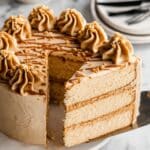
Indulge in the rich, buttery delight of this Biscoff Cake, featuring layers of moist vanilla cake infused with cookie butter and topped with a luscious cookie butter frosting. Perfect for cookie butter lovers, this cake combines a soft crumb with the signature caramelized spice flavors of Biscoff, beautifully decorated with crushed cookies and a drizzle of melted cookie butter.
- Prep Time: 20 minutes
- Cook Time: 25 minutes
- Total Time: 1 hour 10 minutes
- Yield: 8–10 servings 1x
- Category: Dessert
- Method: Baking
- Cuisine: American
Ingredients
Cake Batter
- 2/3 cup unsalted butter, room temperature (150 grams)
- 1 cup granulated sugar (200 grams)
- 1 teaspoon vanilla extract
- 3 large eggs, room temperature
- 2 Tablespoons sour cream (30 grams)
- 1/2 cup cookie butter (120 grams, from 14 oz container)
- 2 cups all-purpose flour (250 grams)
- 2 teaspoons baking powder
- 1 teaspoon kosher salt
- 3/4 cup whole milk, room temperature (180 ml)
Frosting
- 1/2 cup unsalted butter, slightly cold (115 grams)
- 2 1/2 – 3 1/2 cups powdered sugar (300–440 grams)
- 1/2 cup cookie butter (120 grams, reserved)
- 2–3 Tablespoons milk (any kind)
Decoration
- 2 Biscoff cookies, crushed (optional)
- Additional cookie butter for drizzling
Instructions
- Preheat and prep pans: Preheat your oven to 350°F (175°C). Line the bottoms of two 8-inch cake pans with parchment paper and spray with nonstick spray. Set aside.
- Cream butter and sugar: In a large mixing bowl or stand mixer fitted with the paddle attachment, beat the room temperature butter and granulated sugar together for several minutes until the mixture is light and fluffy.
- Add vanilla, eggs, sour cream, and cookie butter: Mix in the vanilla extract, then add eggs one at a time, mixing well after each addition. Stir in the sour cream and 1/2 cup cookie butter until fully incorporated.
- Combine dry ingredients: In a separate bowl, whisk together the all-purpose flour, baking powder, and kosher salt.
- Finish the batter: With your mixer on low, alternately add the dry ingredient mixture and whole milk to the wet ingredients, beginning and ending with the dry mixture. Mix until just combined.
- Bake the cakes: Divide the batter evenly between the prepared pans. Bake in the preheated oven for 22-27 minutes or until a toothpick inserted into the center comes out clean or with a few moist crumbs.
- Cool the cakes: Let the cakes cool in the pans for a few minutes, then invert onto wire racks to cool completely.
- Make the frosting: Using a stand mixer with the paddle attachment, beat the slightly cold butter, 2 1/2 cups powdered sugar, and reserved 1/2 cup cookie butter until smooth. Add 2-3 tablespoons of milk and more powdered sugar as needed, mixing for several minutes until the frosting is fluffy yet thick enough to spread.
- Assemble the cake: Gently melt the remaining cookie butter in the microwave until runny (ensure the aluminum seal is removed). Place one cake layer on a serving plate or cake board. Spread a thin layer of frosting over the cake, then smooth most of the melted cookie butter on top, leaving a 1-inch border around the edge. Reserve some melted cookie butter for drizzling later.
- Add second layer and crumb coat: Place the second cake layer on top. Pipe a line of frosting into the crack between the two layers. Cover the entire cake with a thin layer of frosting to seal in crumbs (crumb coat). Chill the cake in the fridge for 20 minutes or freezer for 10 minutes.
- Final frosting and decoration: Once chilled, add another layer of frosting over the crumb coat. Pipe large decorative swirls around the outer edge on top. Drizzle the reserved melted cookie butter in lines across the top. Sprinkle crushed Biscoff cookies over the cake for a beautiful and flavorful finish.
Notes
- Make sure to bring your eggs, butter, and milk to room temperature to ensure a smooth batter and even baking.
- If the frosting is too thick, add more milk a teaspoon at a time; if too thin, add more powdered sugar.
- You can substitute sour cream with Greek yogurt if needed.
- For an extra moist cake, avoid overbaking—check for doneness starting at 22 minutes.
- Use parchment paper to easily remove cakes from pans without breaking.
- Crushed Biscoff cookies add a nice texture contrast but are optional.
Keywords: Biscoff Cake, Cookie Butter Cake, Vanilla Cake, Biscoff Frosting, Lotus Biscoff, Dessert, Baking